NeurIPS CDMX TripNeurIPS 墨西哥城之行

A Historic First: Two Locations for NeurIPS
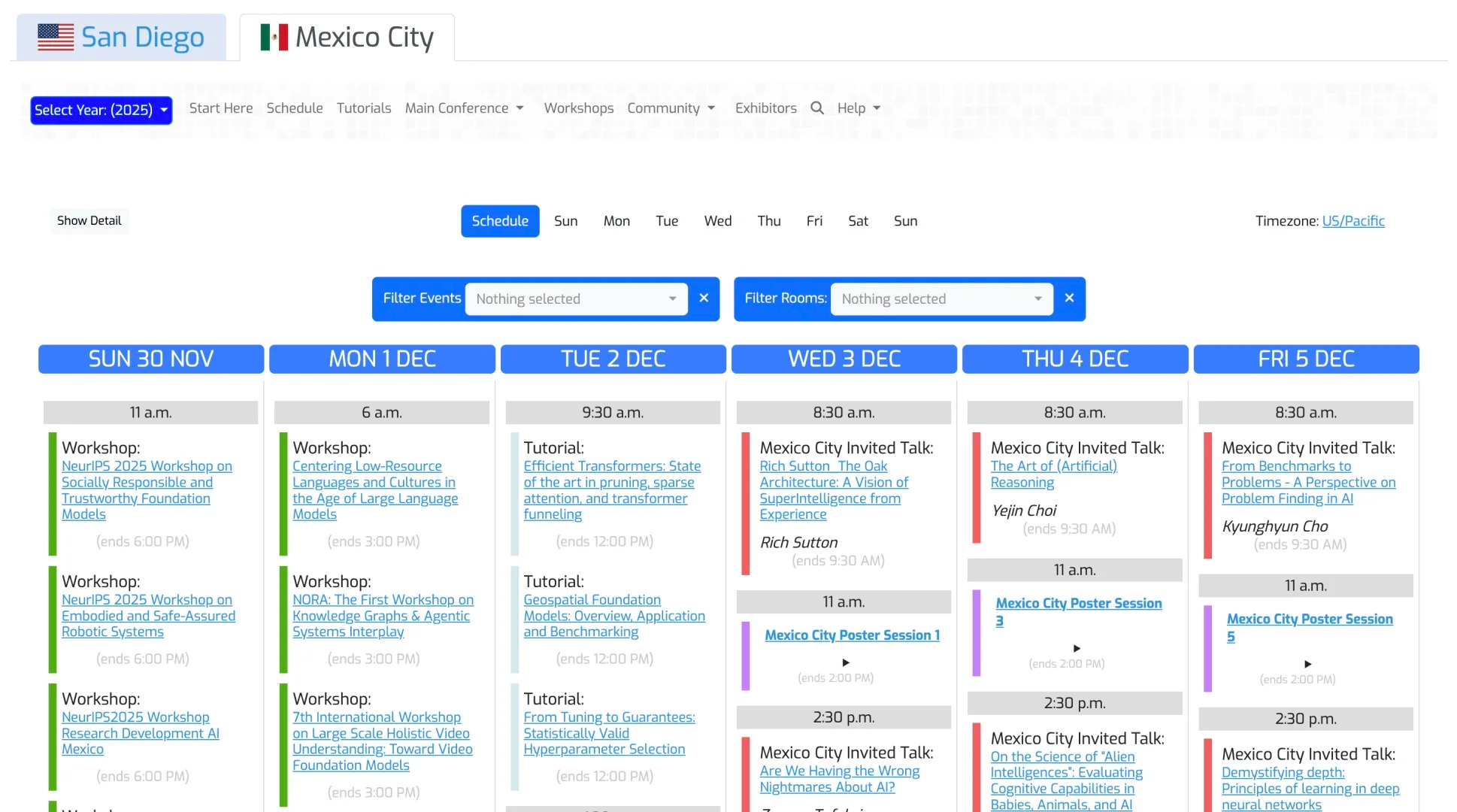
For the first time in its history, NeurIPS made a groundbreaking decision to host the conference across two locations simultaneously: San Diego and Mexico City (CDMX). This unprecedented move reflects both the conference's tremendous growth and its commitment to accessibility. By offering dual venues, NeurIPS opened its doors to researchers who might face visa challenges or geographical barriers, ensuring that the global ML community could participate regardless of their circumstances. The dual-city model represents a bold experiment in making top-tier academic conferences more inclusive and accessible to the international research community.
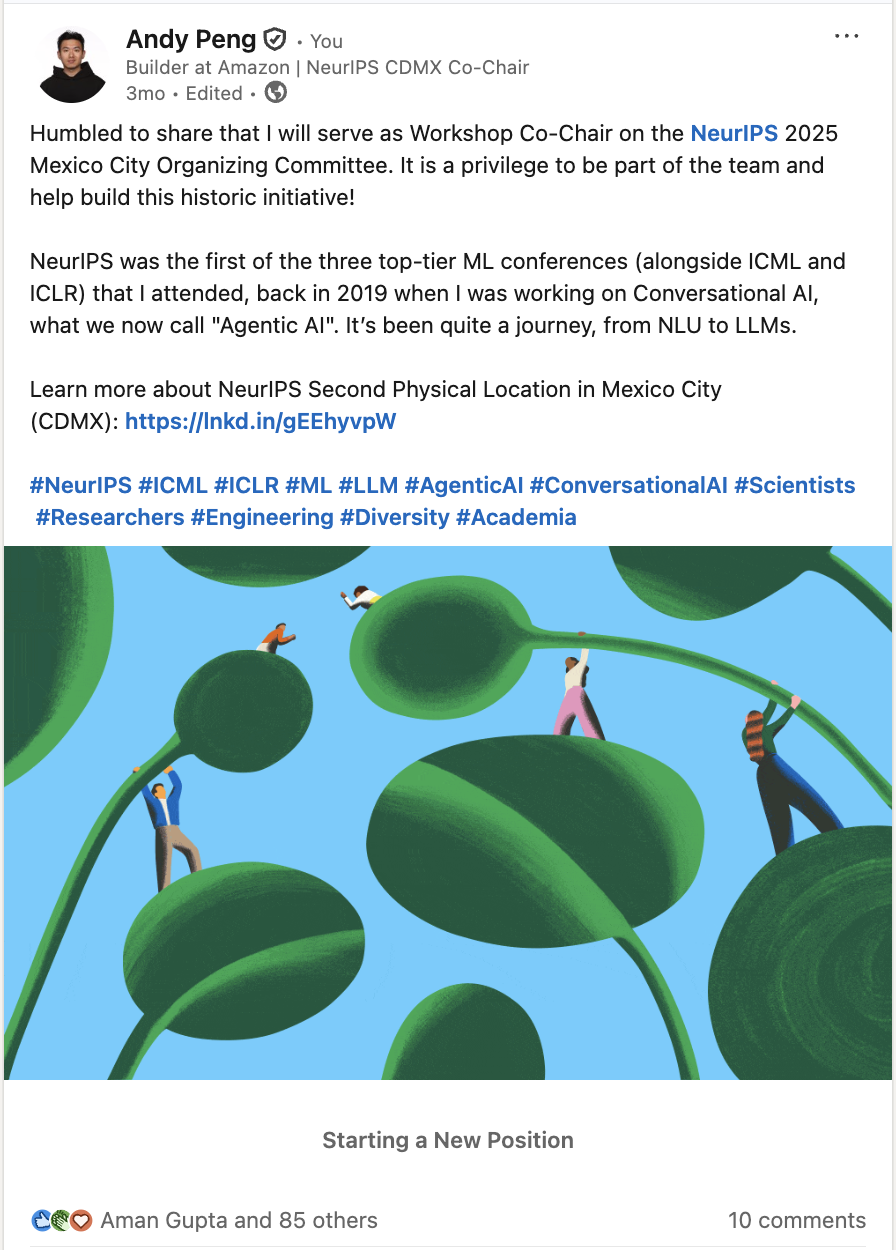
Being Appointed as NeurIPS Workshop Chair
I received the appointment as a Workshop Chair for NeurIPS CDMX this August. Having previously attended events such as KubeCon in San Diego, the opportunity to visit Mexico City—a place I've never explored—feels especially exciting. Contributing to this historic dual-location conference while experiencing a new cultural setting makes the role particularly meaningful, and it's a privilege to help support the research community and facilitate academic exchange in this new format.
An Interlude: The ICLR 2026 OpenReview Issue
During the same period, the academic community was grappling with a significant technical issue at ICLR 2026. I received an invitation to serve as a reviewer for ICLR 2026 in September. After setting my review preferences, I did not receive any paper assignments at that time. Shortly afterward, issues with the OpenReview system became public, affecting numerous reviewers across the community. While the incident remains under investigation, it has sparked important discussions about the infrastructure supporting academic review processes. Thanks to people's sharing on social media, like the tweet by @gan_chuang, I learned that UMass Amherst Professor Andrew McCallum has been hosting and maintaining the platform for many years on a non-profit basis. NeurIPS also reaffirmed the Code of Conduct during the conference week due to this event and continues to monitor the situation.
Academic Conferences: No Longer a Simple Conference
My first NeurIPS was in Vancouver back in 2019, right before the pandemic changed everything. That conference hosted 13,000 participants. This year, as @pmddomingos tweeted, "NeurIPS this year: 30,000 attendees." The scale has more than doubled, but the nature has transformed even more dramatically.
Compared to previous conferences, platforms like Luma have become increasingly popular, a trend I first noticed at ICML this year. NeurIPS is no longer just about invited talks, paper posters, workshops, and tutorials. As the stage where the groundbreaking ‘Attention Is All You Need’ paper first appeared, setting in motion the Transformer architecture and the current LLM era, it has evolved into a bustling marketplace where companies, startups, and VCs prospect for and recruit LLM experts and top talent. The conference has become less purely academic in nature. After-hours meetups and networking events now draw larger crowds than many of the official conference sessions themselves. This represents the first visible divide I observed: the split between the academic mission and the commercial interests converging at these conferences.
NeurIPS vs re:Invent
The timing couldn't have been more symbolic. NeurIPS San Diego ran on the exact same dates as Amazon's re:Invent in Las Vegas. This scheduling conflict forced many practitioners and researchers to choose between the premier academic ML conference and the largest cloud computing industry event. Both present numerous noteworthy innovations and insights.
Open Source vs Closed Source: The PhD Dilemma
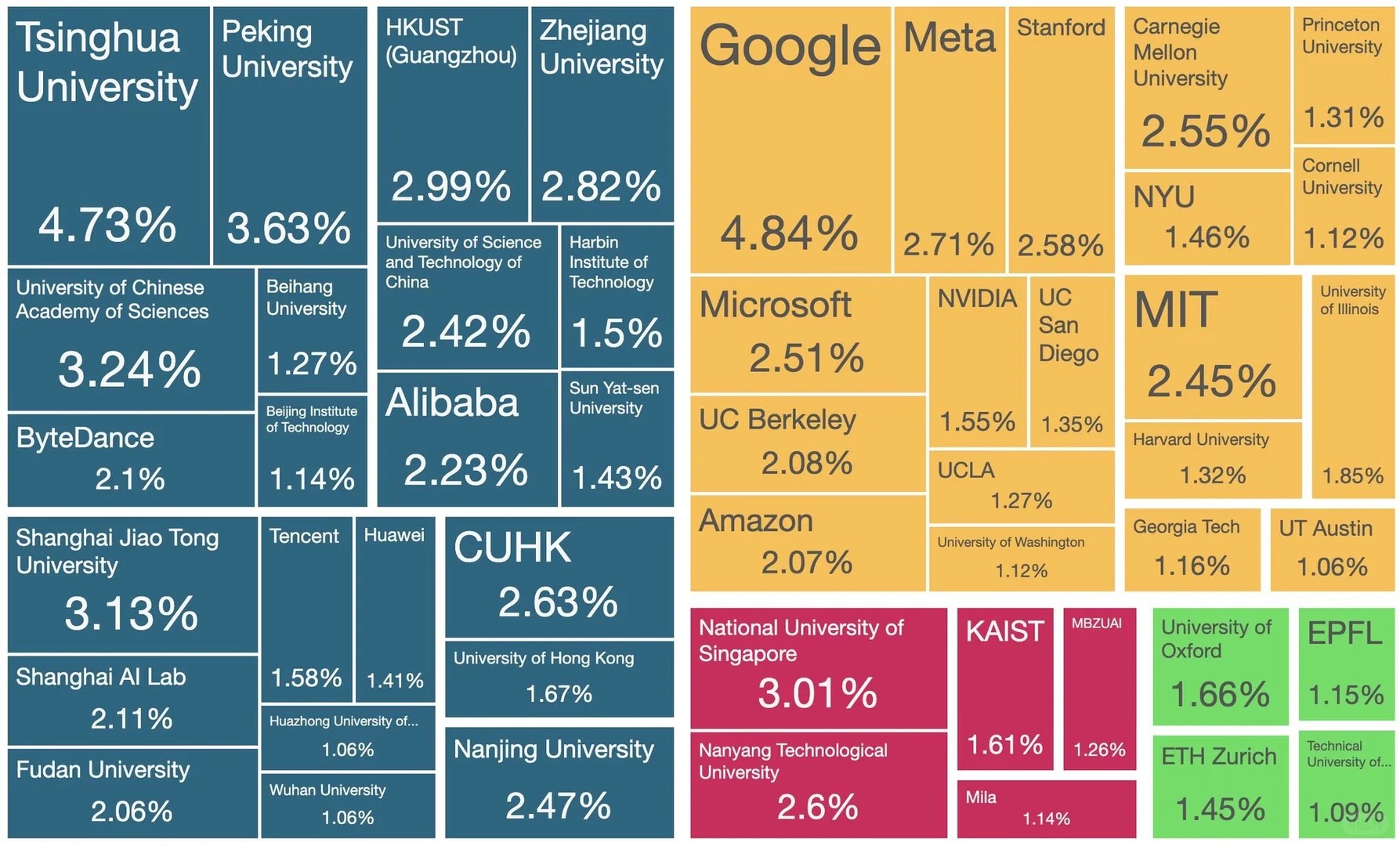
AI World released a report on the distribution of NeurIPS 2025 papers. On one hand, it shows how active different institutions are in research, on the other, it indirectly reflects their level of openness toward innovation.
An interesting trend has emerged among PhD students and early-career researchers: many are becoming reluctant to join core LLM departments at large companies. Instead, they're opting for less high-profile tracks like Ads or other areas, rather than the seemingly prestigious LLM and Agentic AI teams. The reason is sobering.
More and more large companies are limiting paper publications and pushing heavily toward business-driven product delivery. For PhD students and scholars, this creates a difficult equation: low return offer rates combined with zero paper output means minimal advancement in their academic career paths. The lack of openness and transparency around research means zero academic credits for their work. When your work remains behind closed doors, you can't build the publication record needed for academic positions or recognition in the research community.
This represents a fundamental conflict: academia and industry want different things from the same talented researchers. The divide between academia and industry is becoming increasingly clear: researchers rely on publishing and open-source contributions to advance their careers, while large tech companies are tightening their grip on intellectual property, prioritizing secrecy and product-driven development over openness. This closed approach has become the norm, with major innovations often kept under wraps until carefully orchestrated launch events.
CDMX: Where Ancient Meets Modern
Now, back to Mexico City itself. CDMX is a magical place where the ancient and modern coexist in remarkable harmony. I found myself immersed in extraordinary culinary experiences at the world's third-ranked restaurant (a Michelin two-star), and sipping cocktails at the world's number one bar. At the same time, I was captivated by the historical richness of the downtown area, particularly the Templo Mayor Museum, which showcases the ancient Aztec temple ruins in the heart of the city.
The warmth of the Mexican people left a lasting impression. From street vendors to taxi drivers, everyone I encountered displayed genuine hospitality and enthusiasm. The city pulses with an energy that seamlessly blends its pre-Columbian heritage with cutting-edge modernity, creating an atmosphere unlike anywhere else I've visited. It's a city that honors its past while embracing its future, much like the conference itself was attempting to do.


A Meaningful Contribution
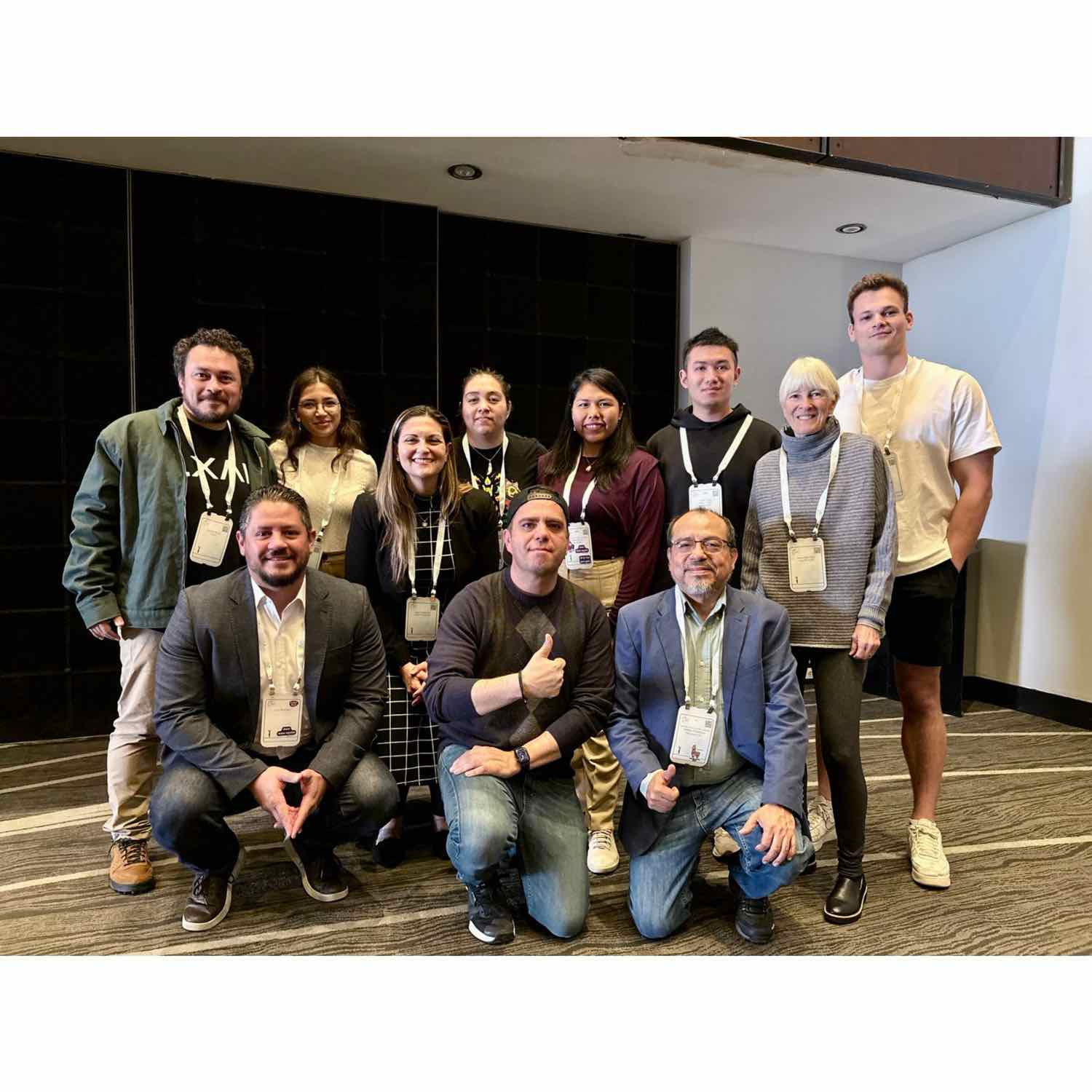
The most moving moment came when I sat together with young researchers from different countries, hearing their stories. Many had come to CDMX as their only option due to pending US visa issues. In that moment, I felt deep gratitude that I could help provide them with a second option, an alternative path to participate in NeurIPS despite bureaucratic obstacles.
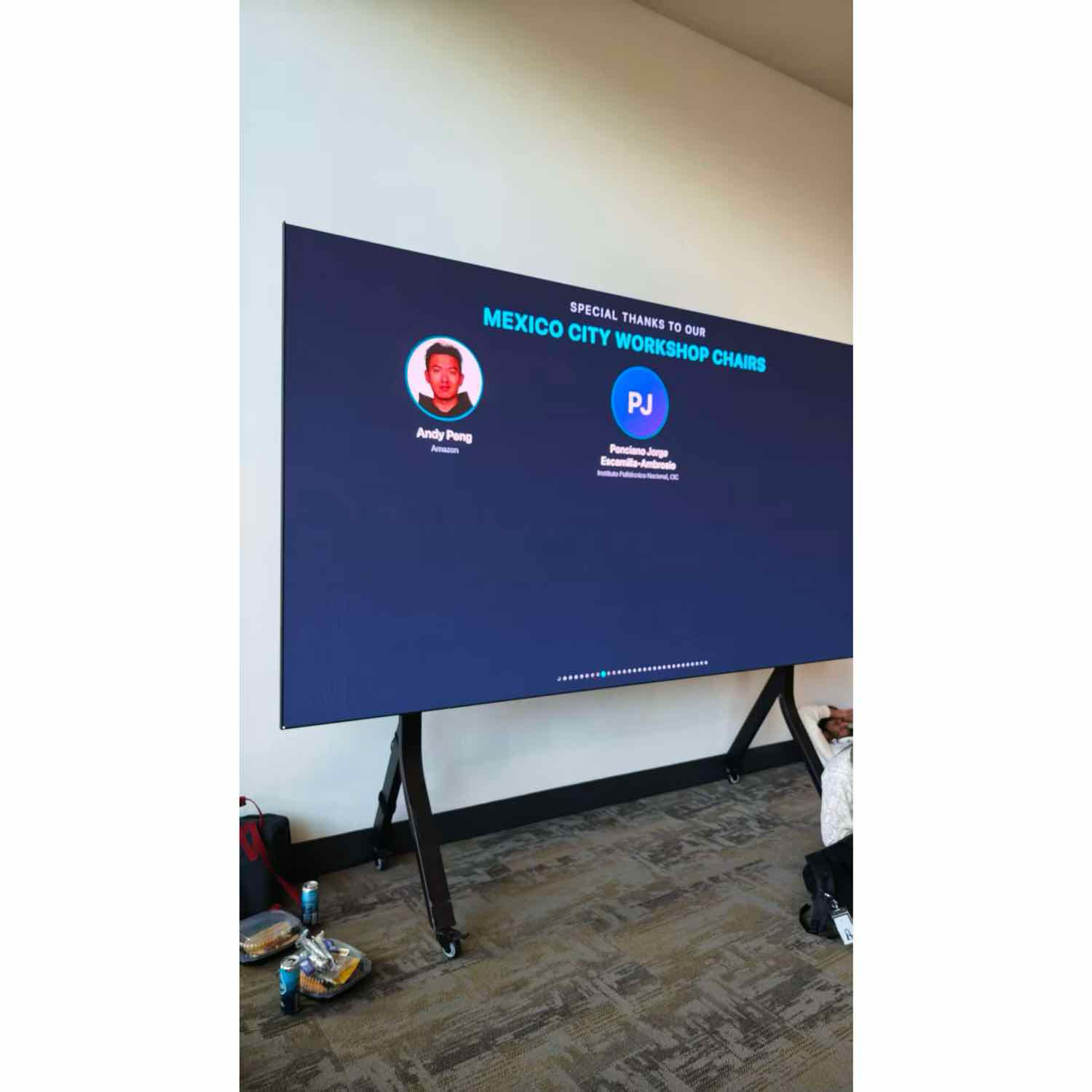
People approached me to say they had seen my photo on the opening ceremony screens at the San Diego venue, with special recognition for my role as Workshop Chair. Their thanks meant more than I expected. But I'm the one who should be thankful. Thank you to NeurIPS for giving me the opportunity to contribute back to the academic community in a meaningful way, to help make the conference more accessible, and to support researchers navigating complex challenges.
This experience reinforced why this work matters. Beyond the papers and the posters, beyond the industry networking and the career opportunities, conferences like NeurIPS serve a fundamental purpose: bringing together minds from across the world to share ideas and advance our collective understanding. When we can make that more inclusive and accessible, we all benefit.
Thank you, NeurIPS.
历史性的第一次:NeurIPS 双会场
NeurIPS 有史以来第一次做出了开创性的决定:在圣地亚哥和墨西哥城(CDMX)两地同时举办会议。这一前所未有的举措既反映了会议规模的巨大增长,也体现了其对可及性的承诺。通过设立双会场,NeurIPS 向可能面临签证难题或地理障碍的研究者敞开了大门,确保全球机器学习社区无论身处何种境况都能参与其中。双城模式是一次大胆的实验,让顶级学术会议对国际研究社区更加包容和可及。
受任 NeurIPS Workshop Chair
今年八月,我收到了 NeurIPS 墨西哥城会场 Workshop Chair 的任命。此前我参加过圣地亚哥的 KubeCon 等活动,而墨西哥城是我从未探索过的地方,这次机会格外令人兴奋。既能为这场历史性的双会场会议贡献力量,又能体验全新的文化环境,这个角色对我而言意义非凡。能够以这种新形式支持研究社区、促进学术交流,是一种荣幸。
插曲:ICLR 2026 OpenReview 事件
同一时期,学术界正被 ICLR 2026 的一次重大技术事件所困扰。我在九月收到了担任 ICLR 2026 审稿人的邀请,设置完审稿偏好后,当时并没有收到任何论文分配。不久之后,OpenReview 系统的问题被公开,波及了社区中大量审稿人。虽然事件仍在调查中,但它引发了关于学术评审基础设施的重要讨论。得益于社交媒体上大家的分享,比如 @gan_chuang 的推文,我了解到马萨诸塞大学阿默斯特分校的 Andrew McCallum 教授多年来一直以非营利方式托管和维护着这个平台。NeurIPS 也因此事在会议周期间重申了行为准则,并持续关注事态发展。
学术会议:不再只是单纯的会议
我的第一次 NeurIPS 是 2019 年在温哥华,就在疫情改变一切之前。那届会议有 13,000 人参加。今年,正如 @pmddomingos 发推所说:"今年的 NeurIPS:30,000 名参会者。" 规模翻了一倍还多,而会议的性质变化更为剧烈。
与以往的会议相比,Luma 这类平台越来越流行,这个趋势我今年在 ICML 上就注意到了。NeurIPS 不再只是特邀报告、论文海报、研讨会和教程。作为开创性论文 "Attention Is All You Need" 首次亮相的舞台——它启动了 Transformer 架构和当下的 LLM 时代——NeurIPS 已经演变成一个热闹的集市:公司、创业团队和风投在这里物色和招募 LLM 专家与顶尖人才。会议的学术纯粹性正在减弱,会后的聚会和社交活动吸引的人群甚至超过了许多官方会议环节。这是我观察到的第一道明显的裂痕:学术使命与商业利益在这些会议上的交汇与分裂。
NeurIPS vs re:Invent
时间安排再有象征意味不过了。NeurIPS 圣地亚哥会场与亚马逊在拉斯维加斯的 re:Invent 日期完全重叠。这一日程冲突迫使许多从业者和研究者在顶级学术机器学习会议与最大的云计算行业盛会之间做出选择。两者都呈现了大量值得关注的创新与洞见。
开源与闭源:博士生的两难
AI World 发布了一份关于 NeurIPS 2025 论文分布的报告。它一方面展示了各机构在研究上的活跃程度,另一方面也间接反映了它们对创新的开放程度。
博士生和早期研究者中出现了一个有趣的趋势:许多人开始不愿加入大公司的核心 LLM 部门,反而选择广告等相对低调的方向,而不是看似光鲜的 LLM 和 Agentic AI 团队。原因发人深省。
越来越多的大公司限制论文发表,全力推进以业务为导向的产品交付。对博士生和学者而言,这构成了一道残酷的算术题:低 return offer 率加上零论文产出,意味着学术生涯几乎无法推进。研究缺乏开放性和透明度,意味着他们的工作拿不到任何学术学分。当你的成果被锁在门后,你就无法积累学术职位或研究社区认可所需的发表记录。
这是一个根本性的冲突:学术界和工业界想从同一批优秀研究者身上得到不同的东西。学术界与工业界的分野日益清晰:研究者依靠发表论文和开源贡献来推进职业生涯,而大型科技公司则收紧知识产权,把保密和产品驱动的开发置于开放之上。这种封闭的做法已成常态,重大创新往往被雪藏到精心编排的发布会才揭晓。
墨西哥城:古老与现代交汇之地
回到墨西哥城本身。CDMX 是一个古老与现代和谐共存的神奇之地。我在世界排名第三的餐厅(米其林二星)沉浸于非凡的美食体验,在世界排名第一的酒吧啜饮鸡尾酒;与此同时,市中心厚重的历史也深深吸引着我,尤其是大神庙博物馆(Templo Mayor Museum),它在城市心脏地带展示着古老的阿兹特克神庙遗址。
墨西哥人民的热情给我留下了深刻印象。从街头小贩到出租车司机,我遇到的每个人都展现出真诚的好客与热忱。这座城市涌动着一种独特的能量,将前哥伦布时期的遗产与前沿的现代性无缝融合,营造出一种我在别处从未体验过的氛围。它是一座既尊重过去又拥抱未来的城市——正如这届会议本身所尝试的那样。
一次有意义的贡献
最触动我的时刻,是与来自不同国家的年轻研究者们坐在一起,听他们讲述自己的故事。许多人因为美国签证悬而未决,来墨西哥城是他们唯一的选择。那一刻,我深深感激自己能帮助为他们提供第二个选项——一条绕过官僚障碍、依然可以参与 NeurIPS 的路。
有人特地过来告诉我,他们在圣地亚哥会场开幕式的大屏幕上看到了我的照片,以及对我 Workshop Chair 角色的特别致谢。他们的感谢比我预想的更让我动容。但真正该道谢的是我。感谢 NeurIPS 给我机会,让我能以一种有意义的方式回馈学术社区,帮助会议变得更加可及,支持研究者们跨越复杂的挑战。
这段经历让我更加确信这份工作的价值。在论文与海报之外,在行业社交与职业机会之外,NeurIPS 这样的会议承载着一个根本使命:让世界各地的头脑汇聚一堂,分享思想,推进我们共同的认知。当我们能让这一切更包容、更可及时,所有人都会受益。
谢谢你,NeurIPS。