Open vs Closed开源 vs 闭源

In the last two weeks of July 2026, the open vs closed debate went from engineering forums to the White House. As someone who has spent years on both sides of this line — building closed-model inference and open-weights model post-training and optimization at Amazon, contributing part-time in open source communities — I want to write down what I saw, and why I believe what I believe.
A side contributor, on the fringes of open source.
The Week Open Weights Went to Washington
Reports surfaced that US officials were weighing a ban on the use of Chinese open-weights models by US companies. What followed was the fastest industry mobilization I have ever watched. Within one week, essentially every major lab and cloud declared a position on open weights.
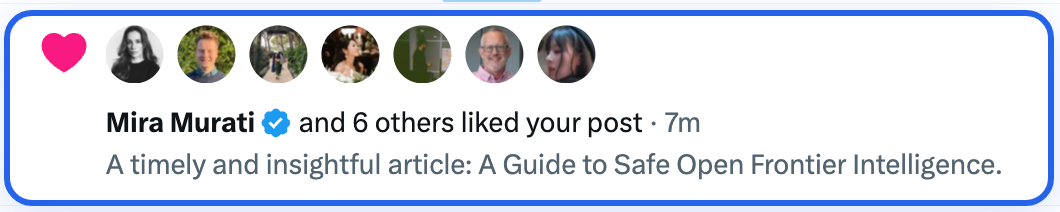
- Matt Garman, AWS CEO, posted that Amazon has signed the Open Weights and American AI Leadership letter — "Open and closed models are complementary."
- Dario Amodei, Anthropic CEO, posted Our Position on Open-Weights Models.
- Moonshot AI released the model weights and technical report of Kimi K3.
- OpenAI signed — Sam Altman: "i want the US to win in AI both in open source and proprietary models."
- Google signed with Sundar Pichai's endorsement. Google DeepMind CEO Demis Hassabis quote-tweeted Jensen: "A strong and secure open ecosystem is important for the world to benefit from AI. We've always supported and contributed heavily to open source and science from Jax to Transformers to AlphaFold to Gemma open models" — clarifying later that Gemma 4 alone has 300M+ downloads, and the Gemma series 900M+.
- SpaceX joined with Elon Musk's support.
Fifty signatures in seventy-two hours. The interesting question is not who signed — it is why the coalition spans every layer of the industry at once: chipmakers like NVIDIA and Dell, clouds and closed-model labs like Microsoft — later joined by OpenAI and Google — and open platforms like Hugging Face and IBM. What do they all see in open weights? To answer that, rewind twelve years.
Open Weights vs Open Source
Before going further, one terminology correction the debate keeps stumbling over: almost none of the "open source" models in the headlines are open source in the sense the software world has used the term for twenty-five years. They are open weights. The letter fifty companies signed says "open weights" in its title for a reason, and the distinction is not pedantry — it decides what you can actually do with the model.
In classic open source, you get the source — everything needed to study, reproduce, and modify the artifact. For a model, the "source" is not just the final tensors; it is the training data, the data processing pipeline, the training code, and the recipe that turns compute into a checkpoint. An open-weights release gives you the compiled output — the trained parameters — under a license that lets you run, fine-tune, and redistribute it. You can customize the artifact; you cannot rebuild it from scratch.
Kimi K3 — the release that anchored the week of July 27 — is the perfect example, because Moonshot AI opened up unusually much and the gap is still visible. Here is what is public and what is not:
| Component | Status | Where / Notes |
|---|---|---|
| Released with Kimi K3 | ||
| Model weights2.8T params · MXFP4 quantization-aware | Public | Hugging Face |
| ArchitectureKDA · AttnRes · Stable LatentMoE · 16-of-896 experts | Public | Model card & tech report |
| Technical report & evaluation results | Public | GitHub |
| Systems stackattention kernels · MoE communication library · agent-environment infrastructure | Public | opened alongside K3 |
| Inference integrationvLLM · SGLang · Transformers | Public | community serving stacks |
| The model's "source" — held back | ||
| Pre-training data & data processing pipeline | Not public | — |
| Training code & distributed training framework | Not public | — |
| Post-training recipe — piece by piece | ||
| Methodology write-upSFT → RL pipeline, described at a high level | Public | tech report |
| SFT / instruction-tuning datasets | Not public | — |
| RL environments & verifiable-reward tasks | Not public | the infrastructure to run agent environments is open; the environments and tasks themselves are not |
| Reward models & graders | Not public | — |
| Terms | ||
| Licensecustom "Kimi K3 License" — permissive, but not an OSI-approved open-source license | Custom | LICENSE |
The software analogy: an open-weights model is a freely redistributable binary — you can run it anywhere, patch it (fine-tune), even ship modified copies — but the source tree (data, pipeline, training code) stays in-house. By the OSI's Open Source AI Definition, which requires data information, training code, and weights all under open terms, K3 does not qualify — and neither do Llama, Gemma, or gpt-oss. The rare models that come close are efforts like AI2's OLMo, which release data, code, and checkpoints together. DeepSeek-R1 sits in between: MIT-licensed weights — a genuinely open-source license — but still no training data or pipeline.
Two honest observations follow. First, the gap is not hypocrisy; it is physics and economics. The training corpus embeds licensing liabilities no lab can fully clear, and the data pipeline is the crown jewel — more than architecture, it is where frontier labs differ. Second, the gap matters less than purists claim for most practical purposes: the customization loop later in this essay — fine-tuning, RL post-training, speculative decoding, quantization — needs the tensors, not the corpus. What you cannot do without the source is reproduce or fully audit the model — which is exactly why the interpretability and evaluation arguments in the trust & safety section run on weights, and why true open-source models remain scientifically precious even when they trail the frontier.
So throughout this essay I say "open weights" when I mean releases like Kimi K3, and reserve "open source" for the ecosystem — vLLM, SGLang, Kubernetes, Kafka — where the term actually applies. The July letter got the terminology right; most of the coverage did not.
Déjà Vu: We Have Seen This Movie Before
In January 2022, Honeypot released Kubernetes: The Documentary. It is the most honest account I know of why a giant open-sources its crown jewels. Around 2013, AWS was, in early Kubernetes engineer Tim Hockin's words, "this behemoth that was on everybody's mind." Kubernetes co-founder Joe Beda put Google's calculus plainly:
Open-sourcing Kubernetes was not charity. It was strategy — the challenger opens to commoditize the leader's advantage. And it worked, for a reason Brewer named precisely: "Kubernetes won in part because it had a vast army of contributors behind it… that rate of change kind of trumps everything else."
The pattern repeats across software history. Apache Kafka is my favorite example: LinkedIn open-sourced it in 2011, Confluent commercialized it, and today Kafka is the de facto event-streaming standard — with Amazon MSK and Confluent Cloud competing to run the same open protocol. The open standard grew the market; the vendors compete on operations, performance, and trust. Nobody was destroyed by openness. Linux vs Windows, Android vs iOS, MySQL vs Oracle, Kubernetes vs proprietary orchestrators — same movie, different decade. Android took the volume, iOS kept the margins — and both are still here.
Look closer and there is a second recurring pattern: the winning commercial product very often stacks on top of an open-source primitive. Confluent is built on Apache Kafka; Databricks on Apache Spark; AWS Lambda, Fargate and App Runner sit on Firecracker, which runs on containerd; Google Cloud Run is built on Knative, which runs on Kubernetes atop containerd. The open layer sets the standard and grows the market — the closed layer sells operations, reliability, and enterprise trust on top. There is no reason to believe AI will be different — artificial intelligence will be built the same way, stack 0 through stack n−1, with agents and Model-as-a-Service somewhere in between. What the lower stacks look like — open weights, closed models, or a mix — there is no definitive answer yet.
So when NVIDIA — whose hardware profits from every token, open or closed — organizes an open-weights letter, and Microsoft, Meta and OpenAI sign, I do not read it as altruism. I read it as the Kubernetes playbook, replayed at the model layer: open the layer where you are not the monopolist, and compete on the layers where you are strong.
NVIDIA Ecosystem
Of the twenty-five original signatories, NVIDIA is the one that needed the letter least. It sells the shovels; every token, open or closed, is billed to an accelerator somewhere. So why spend the political capital — why does Jensen Huang join X after years of staying off it, and make an open-weights letter his first post ever?
Because NVIDIA has never been only a chip vendor. It is one of the most effective ecosystem builders in the industry's history, and it has been running the same play for twenty years: give away everything above the silicon. CUDA has been free since 2006. cuDNN, NCCL, Megatron-LM, TensorRT, Triton Inference Server, NeMo, Dynamo — all released, all designed so that somebody else's software runs best on NVIDIA hardware. It publishes its own open-weight models (Nemotron) and upstreams kernels into vLLM and SGLang. None of that is philanthropy: every open layer above the chip is a demand funnel into the chip. The more of the AI stack that is open and CUDA-shaped, the more often the default answer to "what do we run this on" is NVIDIA.
Now look at where each part of the market actually sits on silicon. The same three layers — model, serving stack, silicon — with three different bottom lines:
co-designed
AWS Trainium
where hosted
The asymmetry is about the shape of demand, not about ideology. Concentrated demand can afford vertical integration: a lab spending tens of billions a year on compute is exactly the customer who can fund a custom accelerator program and negotiate a second GPU source. That is why the closed frontier is the fastest-diversifying part of the market — OpenAI has added AMD capacity and a Broadcom co-designed accelerator; Anthropic trains and serves across Google TPU and AWS Trainium alongside NVIDIA. In the closed world, NVIDIA's share of its largest customers' silicon has one direction to go.
Open weights invert that shape. The demand is fragmented across thousands of enterprises, neoclouds, startups, and universities, and essentially none of them can fund an ASIC program or staff a compiler team. They run whatever the community's serving stack runs best on — and the community's kernels are written for CUDA first. Every Kimi K3, DeepSeek or Qwen release lands as a fresh wave of deployments onto NVIDIA hardware, by default, with nobody negotiating. Open weights convert one negotiated mega-contract into ten thousand unnegotiated ones.
Read that way, NVIDIA's letter is precisely the move Google made in 2014: open the layer where you are not the monopolist, defend the layer where you are. Google gave away the orchestrator to sell the cloud; NVIDIA champions open weights to sell the accelerator. The ecosystem argument and the commercial argument point the same direction — which is exactly why it is credible, and why an ecosystem builder is the natural leader of this coalition rather than a model lab.
A Participant and a Part-Time Contributor
I should be honest about where I sit in open source: on the fringes, not in the inner circle. As a co-creator of AWS App Runner, I had the chance to work deeply with the open source programs the service is built on — containerd, Envoy, OpenTelemetry, Kafka — and that access is where my understanding of these communities comes from (I wrote about that path here). It is also why I call myself a side contributor rather than a maintainer: unlike the people who write upstream code every day and carry those projects, my work at corporate ultimately shipped to users as a managed service. Since 2019 I have contributed where I could across the Linux Foundation and CNCF communities, served as a CNCF Ambassador (until 2027 term), and spent four-plus years on Program Committees for PyTorchCon, CloudNativeCon and the Open Source Summit. I wrote about that decade of community in CNCF Turns 10.
On the closed side: at AWS I built Bedrock's Anthropic inference engine from zero to one and shipped the production releases of Claude 3 Opus, 3.5 Sonnet, and 3.5 Haiku — a chapter I wrote about in My Story with Anthropic. Today I work on the open-weights model business: OpenAI's gpt-oss, Google DeepMind's Gemma, Alibaba's Qwen, and DeepSeek, plus post-training, evaluation, and inference optimization (speculative decoding) for open-weight models.
Both tables, one lesson. In the same year DeepSeek-R1 was released, I wrote down my read in my DeepSeek post — open source is the way — and co-authored the book DeepSeek in Practice. And I noted in LLM Native that the open-source LLM ecosystem — vLLM, SGLang, llm-d, Dynamo, MCP — is already in place. The through-line: open source is not a product strategy, it is an ecosystem. Ecosystems grow markets; they do not zero-sum them.
The Open-Weight Model Market
Follow the money, and the picture is genuinely two-sided. Capital is pouring into open-weight infrastructure:
On July 16, Fireworks AI raised a $1.505B Series D at a $17.5B valuation — led by Atreides, Index and TCV with Nvidia participating — crossing $1B ARR serving custom and open models for customers like Uber and Shopify. Founder Lin Qiao previously built PyTorch at Meta. Two weeks earlier, Together AI raised an $800M Series C at $8.3B — up from $3.3B just sixteen months prior — with annual bookings past $1.15B and open-source model usage tripling in twelve months. Its business model: per-token APIs over open models (roughly 30–40% of revenue, per Sacra) plus GPU cluster rentals, serving Cursor, Cognition and Decagon.
For scale, hold the open-weight infrastructure curve against the closed-side flagship. Anthropic, founded in 2021, went from $4.1B (May 2023) through $61.5B to $965B — roughly 235x in three years. Fireworks, founded in 2022, went from $552M to $17.5B in two years — ~32x. Both curves are vertical; the market is not choosing sides, it is pricing both:
Usage tells the same story — straight from OpenRouter's own data. Its State of AI study with a16z, spanning 100+ trillion routed tokens, found open-weight models averaging 26.7% of all token volume over the year and reaching roughly one-third by late 2025 — "the equilibrium is currently reached at roughly 30%," the authors wrote. Then 2026 broke the equilibrium: per OpenRouter's official June analysis of 450 trillion tokens, open weights crossed into the majority of all routed tokens, and DeepSeek alone doubled from 9% to 18% to become the platform's top model author since mid-May.
But spending flows the other way. a16z's survey of 100 Global 2000 CIOs found open source falling from 19% to 11% of enterprise AI spend, with closed models climbing from 81% to 89% — even as open source's share of raw tokens rose. Read together: open weights are winning tokens and workloads; closed models are winning budgets and the last production mile. That is not a contradiction — it is a division of labor. High-volume, cost-sensitive, customizable workloads go open; frontier reasoning and turnkey enterprise features stay closed, for now.
China's Model Companies: The Tigers Go Public
No account of the open-weights market is complete without the companies actually shipping most of the open frontier. In 2026, China's "AI tigers" — DeepSeek, Moonshot AI, MiniMax, Zhipu AI, StepFun — stopped being a funding story and became a public-markets story.
- DeepSeek — the most remarkable case: founder Liang Wenfeng refused outside money entirely until 2026, then raised a $7.4B Series A in June, investing up to 40% of it himself to keep control. A July shareholder filing implies a ~$52B valuation; reports put its next round in talks at ~$70B pre-money.
- Moonshot AI — $2.5B (Feb 2024) → $4.3B (late 2025) → $10B (early 2026) → $20B (May); after Kimi K3, closing a round at just over $30B with a Hong Kong listing planned within six months. Roughly 8x in a year — powered by giving the weights away.
- Zhipu AI — from ~$3B (May 2024) to a HKEX debut on January 8, 2026 at a $7.4B market cap (+13%) — then past $100B market cap by July, raising another $4B, with a Shanghai STAR dual listing planned.
- MiniMax — $2.5B (March 2024) → $4B (mid-2025) → HKEX listing on January 9, 2026, doubling on debut (+109%).
- StepFun — ~$2B (late 2024) → filed for a Hong Kong IPO in June at a proposed valuation of up to $12B.
Put this next to the a16z spend data and the picture sharpens: US enterprises may still route their budgets to closed models, but public markets — Hong Kong first — are now pricing open-weight labs as durable businesses. Giving away the weights did not destroy value. It created the fastest IPO cohort in AI.
Model Customization: Fine-Tuning, RL & Self-Improvement
First, the macro view. A frontier model's lifecycle runs from data through pre-training, mid-training, post-training, evaluation, and release. Who gets to customize each stage is the open-vs-closed debate in a single picture:
Why do enterprises want weights at all? Because the frontier of value has moved from prompting a general model to specializing a model on your own data and your own reward signal. This is exactly the demand Fireworks calls "specialized intelligence" and Together monetizes through fine-tuning APIs — and it is only possible when you own or can touch the weights. The loop looks like this:
Supervised fine-tuning teaches the model your domain; reinforcement learning — RLHF with human preferences, or RLVR with verifiable rewards for code and math — aligns it with your objective; and the newest turn is recursive self-improvement (RSI)-style loops, where the model generates its own training data, grades it against verifiers, and feeds the survivors back into training. Every arrow in that diagram requires access to weights. A closed API gives you, at best, the vendor's hosted fine-tuning of the vendor's model on the vendor's terms. This — not ideology — is the structural market demand behind open weights: the customization loop is where enterprise differentiation now lives, and the loop does not close without the weights.
Trust & Safety, Evaluation, Interpretability
The safety debate deserves honesty from both sides. Closed-model providers are right that released weights cannot be recalled, and guardrails on open models can be fine-tuned away. Amodei's position — mandatory pre-release testing for all sufficiently capable models, open and closed — is the most reasonable version of that argument, and I agree with testing over bans.
But openness carries its own safety advantages that the debate under-weights. You cannot audit what you cannot see: interpretability research — the field Amodei himself called urgent in The Urgency of Interpretability — overwhelmingly runs on open weights, because probing activations and circuits requires the tensors, not an API. Independent evaluation works the same way: the community can red-team, benchmark and reproduce results on Qwen or Kimi K3 without a vendor's permission, while closed models are evaluated under NDA-shaped access on the vendor's schedule. Mature deployments need both open and closed, which is one more reason bans are the wrong tool.
And evaluation itself just became a safety surface. In the same two weeks the open-weights letter was circulating, both frontier labs disclosed real incidents from inside their own cyber evaluations:
Price Performance
The economics are now well documented. Per Epoch AI data reported by The New Stack, open-weight models trail closed frontier models by roughly four months in capability — at about one-tenth the token price. CNCF executive director Jonathan Bryce: "Paying ten times more for a four-month capability lead is not an enterprise AI strategy… it's a very expensive form of lock-in."
Independent leaderboards put numbers on the gap. On the Artificial Analysis Intelligence Index (v4.1, July 2026), the best open weights sit points — not tiers — behind the closed frontier, at a fraction of the price:
Read it either way — list price or cost per completed task — the shape is the same: Kimi K3 delivers 95% of Fable 5's index score at about a quarter of the cost per task. Put simply: much of the closed-model premium buys the platform around the model, not more intelligence.
The New Stack's July benchmark made the trade explicit — Claude Fable 5 vs. Kimi K3: same results, one-third the cost, 4x slower. Money vs latency. And a Featherless case study puts self-hosting economics in sharp relief: a team at full utilization burning 100B tokens/month pays ~$1.56M/year on GPT-5.5 — versus a $90K/year fixed private-cloud rate running open-weight GLM 5.2, a 94% reduction.
And the floor keeps dropping. On the day I am finishing this essay — July 31 — DeepSeek put its V4-Flash API into public beta: $0.14 per million input tokens ($0.0028 on cache hits), $0.28 per million output, with a 1M-token context window. Against Fable 5's $10/$50 list price, that is roughly 70x cheaper on input and 180x on output — from the lab that made open weights a frontier phenomenon. One day's news, same curve, bending further.
And the sticker price is only the starting point: with open weights, the optimization headroom belongs to you. This is stage 06 of the lifecycle pipeline above — the stage a closed API never lets you touch. Because you own the serving stack, you can train your own speculator for speculative decoding, quantize to FP8/INT4 where quality allows, and tune kernels for your hardware — quality-lossless (or near-lossless) optimizations that routinely deliver multiples of throughput. On a closed API, that headroom is the vendor's margin; on open weights, it is your cost curve. This is my day job on the open-weights side, and it is where the ten-times gap keeps widening.
The honest caveats: closed frontier models still win on raw capability at the edge, on latency (Kimi K3 was 4x slower in that benchmark), and on turnkey enterprise features — identity integration, connectors, observability — which is much of what enterprises are actually paying for, as the a16z spend data shows. Price performance is not one number; it is a curve, and open weights now dominate the high-volume, cost-sensitive stretch of it.
Open Intelligence
It would be easy to close this essay the way industry essays usually close — with market share, competitive playbooks, who wins. But that framing is too small for what is actually at stake. AI is another industrial revolution, and the hardest problems ahead of us — alignment, interpretability, safety, how humans and increasingly capable AI systems coexist — are not problems any single company, or any single country, can solve alone. They are problems for humanity, and humanity works on shared problems through open ecosystems: open weights that any researcher can probe, open evaluations that anyone can reproduce, open science of the kind that produced the transformer itself.
This is why the events of July matter beyond the headlines. When fifty companies — bitter competitors on every other front — sign the same letter within seventy-two hours, they are acknowledging something deeper than commercial interest: that the path to trustworthy AI runs through openness. Interpretability research runs on open weights. Independent red-teaming runs on open weights. The global cooperation that safety testing will require — the kind even Amodei argues must include every capable lab, in every country — is only possible if the science stays open enough for everyone to participate. Open source enables innovation, research, and the democratization of AI; more than that, it is how we keep each other honest while building the most consequential technology in human history.
2026 年 7 月的最后两周,"开源 vs 闭源"之争从工程师论坛一路吵到了白宫。作为一个在这条分界线两侧都待过多年的人——在亚马逊从零到一构建闭源模型推理引擎、也负责开放权重模型的后训练和优化,同时利用业余时间在开源社区持续贡献——我想把这两周看到的记下来,也讲清楚我为什么相信我所相信的。
一个开源社区的边缘人。
开放权重走进华盛顿的一周
有报道称,美国官员正在权衡禁止美国公司使用中国的开放权重模型。随后发生的,是我见过的最快的一次行业总动员——一周之内,几乎所有主要实验室和云厂商都对开放权重表明了立场。
- 亚马逊云科技 CEO Matt Garman 发文宣布亚马逊已签署《开放权重与美国 AI 领导力》公开信——"开放模型与闭源模型是互补的"。
- Anthropic CEO Dario Amodei 发表《我们对开放权重模型的立场》。
- 月之暗面发布了 Kimi K3 的模型权重与技术报告。
- OpenAI 签署——Sam Altman:"我希望美国在开源和专有模型上都赢。"
- 谷歌 在 Sundar Pichai 背书下签署。Google DeepMind CEO Demis Hassabis 引用转发黄仁勋:"一个强大而安全的开放生态系统,对让全世界受益于 AI 至关重要。从 Jax 到 Transformers、AlphaFold,再到 Gemma 开放模型,我们始终重仓支持和贡献开源与开放科学",随后澄清:仅 Gemma 4 下载量就超 3 亿,Gemma 系列整体超 9 亿。
- SpaceX 加入并获 Elon Musk 支持。
七十二小时,五十个签名。有意思的问题不是谁签了,而是:为什么这个联盟一次性横跨了行业的每一层:NVIDIA、Dell 这样的芯片与硬件商,Microsoft 这样的云与闭源模型厂(OpenAI、谷歌随后跟进),还有 Hugging Face、IBM 这样的开放平台?它们都在开放权重里看到了什么?要回答这个问题,把时间倒回十二年。
开放权重不等于开源
往下写之前,先纠正一个这场辩论反复踩到的术语问题:新闻头条里的"开源"模型,几乎没有一个符合软件世界沿用了二十五年的"开源"定义。它们是开放权重(open weights)。五十家公司签署的那封信,标题写的就是"open weights",这不是偶然——这个区分也不是咬文嚼字,它直接决定了你拿到模型之后能做什么。
经典的开源,给你的是源代码——研究、复现、修改这个软件所需要的一切。对一个模型而言,"源代码"不只是最终的那堆张量,而是训练数据、数据处理管线、训练代码,以及把算力变成检查点的那套配方。而开放权重的发布,给你的是编译产物——训练好的参数——外加一份允许你运行、微调、再分发的许可。你可以定制这个产物,但你无法从零重建它。
Kimi K3——锚定 7 月 27 日那一周的发布——是最好的例子,因为月之暗面开放的东西已经异常地多,而那道缺口依然清晰可见。哪些公开了,哪些没有:
| 组件 | 状态 | 位置 / 说明 |
|---|---|---|
| 随 Kimi K3 发布 | ||
| 模型权重2.8 万亿参数 · MXFP4 量化感知训练 | 公开 | Hugging Face |
| 架构KDA · AttnRes · Stable LatentMoE · 896 选 16 专家 | 公开 | 模型卡与技术报告 |
| 技术报告与评测结果 | 公开 | GitHub |
| 系统栈注意力内核 · MoE 通信库 · Agent 环境基础设施 | 公开 | 随 K3 一同开放 |
| 推理集成vLLM · SGLang · Transformers | 公开 | 社区推理栈 |
| 模型的"源代码"——未随发布公开 | ||
| 预训练数据与数据处理管线 | 未公开 | — |
| 训练代码与分布式训练框架 | 未公开 | — |
| 后训练配方——逐项拆解 | ||
| 方法论述SFT → RL 流程,报告中做了概要描述 | 公开 | 技术报告 |
| SFT / 指令微调数据集 | 未公开 | — |
| RL 训练环境与可验证奖励任务 | 未公开 | 运行 Agent 环境的基础设施已开放,但环境与任务本身没有 |
| 奖励模型与评分器 | 未公开 | — |
| 使用条款 | ||
| 许可证自定义"Kimi K3 License"——宽松,但不是 OSI 认证的开源许可证 | 自定义 | LICENSE |
用软件打比方:开放权重的模型是一个可自由再分发的二进制文件——你可以随处运行它、给它打补丁(微调)、甚至发布修改后的副本——但源码树(数据、管线、训练代码)留在了厂商内部。按 OSI 的开源 AI 定义——要求数据信息、训练代码、权重全部以开放条款发布——K3 并不合格,Llama、Gemma、gpt-oss 也都不合格。真正接近的是 AI2 的 OLMo 这类项目:数据、代码、检查点一并发布。DeepSeek-R1 则在两者之间:MIT 许可的权重——一份货真价实的开源许可证——但训练数据和管线同样没有公开。
由此得出两个诚实的观察。第一,这道缺口不是虚伪,而是物理与经济规律:训练语料里嵌着任何实验室都无法完全厘清的授权责任,而数据管线本身就是王冠明珠——前沿实验室之间真正的差异,与其说在架构,不如说在这里。第二,对多数实际用途而言,这道缺口没有纯粹主义者说的那么要命:本文后面讲的定制闭环——微调、RL 后训练、投机解码、量化——需要的是张量,不是语料。没有"源代码"你做不到的,是复现和彻底审计这个模型——这恰恰是信任与安全一节里可解释性与独立评测论证的出发点,也是为什么真正的开源模型即便落后于前沿,在科学上依然珍贵。
所以在这篇文章里,凡是指 Kimi K3 这类发布,我都说"开放权重";"开源"一词留给它真正适用的地方——vLLM、SGLang、Kubernetes、Kafka 这些生态。七月那封信在术语上是对的;大部分报道不是。
既视感:这部电影我们看过
2022 年 1 月,Honeypot 发布了《Kubernetes:纪录片》。这是我所知道的、关于"巨头为什么开源自己的王冠明珠"最诚实的记录。2013 年前后,用早期 Kubernetes 工程师 Tim Hockin 的话说,亚马逊云科技是"压在每个人心头的庞然大物"。Kubernetes 联合创始人 Joe Beda 把谷歌的盘算讲得再直白不过:
开源 Kubernetes 不是慈善,是战略——挑战者用开放来瓦解领先者的优势。而它成功的原因,Brewer 说得精准:"Kubernetes 赢,部分是因为它背后有一支庞大的贡献者大军……那种变化速度,胜过其他一切。"
这个模式在软件史上反复重演。Apache Kafka 是我最喜欢的例子:领英在 2011 年将它开源,Confluent 将它商业化,今天 Kafka 已是事实上的事件流标准,Amazon MSK 与 Confluent Cloud 在竞争运行同一个开放协议。开放标准做大了市场,厂商在运维、性能与信任上竞争,没有谁被开放摧毁。Linux 对 Windows、Android 对 iOS、MySQL 对 Oracle、Kubernetes 对各家专有编排器:同一部电影,换个年代重播。Android 拿走了出货量,iOS 守住了利润,两者都活得很好。
再看深一层,还有第二个反复出现的模式:赢下市场的商业产品,往往叠在开源基础件(primitive)之上。Confluent 构建在 Apache Kafka 之上;Databricks 构建在 Apache Spark 之上;AWS Lambda、Fargate、App Runner 以 Firecracker 为底座,Firecracker 运行于 containerd;Google Cloud Run 构建在 Knative 之上,Knative 运行于 Kubernetes,Kubernetes 运行于 containerd。开放层制定标准、做大市场——闭源层在其上出售运维、可靠性与企业信任。没有理由相信 AI 会例外——人工智能将以同样的方式从 Stack 0 到 Stack n−1 一层层建起来,Agent 与 Model-as-a-Service 位列其间。至于下面那些栈层长什么样——开放权重、闭源模型,还是混合——暂时没有标准答案。
所以当 NVIDIA——无论 token 来自开源还是闭源模型,它的硬件都赚钱——牵头组织开放权重公开信,而 Microsoft、Meta、OpenAI 纷纷签署时,我读到的不是理想主义,而是 Kubernetes 剧本在模型层的重演:在你不是垄断者的那一层开放,在你强势的那几层竞争。
NVIDIA 生态
最初的 25 家联署方里,最"不需要"这封信的就是 NVIDIA。它卖铲子——无论开源还是闭源,每一个 token 最终都记在某块加速卡上。那为什么要花这份政治资本?为什么黄仁勋在多年不用 X 之后专门入驻,并把一封开放权重公开信作为此平台上的第一条推文?
因为 NVIDIA 从来不只是一家芯片公司。它是这个行业历史上最成功的生态建设者之一,而且二十年来一直在打同一套牌:把硅片之上的东西全部送出去。CUDA 从 2006 年起就是免费的。cuDNN、NCCL、Megatron-LM、TensorRT、Triton Inference Server、NeMo、Dynamo——全部开放,全部为了让"别人的软件"在 NVIDIA 硬件上跑得最好。它自己发布开放权重模型(Nemotron),也把算子上游贡献进 vLLM 和 SGLang。这同样不是慈善:芯片之上每一个开放层,都是通往芯片的需求漏斗。AI 栈里开放、且长成 CUDA 形状的部分越多,"这东西跑在什么上面"这个问题的默认答案就越是 NVIDIA。
再看这个市场的各个部分实际坐在什么硅片上。同样的三层——模型、推理栈、硅片——却是三条不同的底线:
联合定制
AWS Trainium
取决于托管方
这种不对称关乎需求的形状,而非意识形态。集中的需求能负担垂直整合:一家每年在算力上花掉几百亿美元的实验室,恰恰是那种能养得起自研加速器项目、也能谈下第二家 GPU 供应商的客户。这就是为什么闭源前沿反而是这个市场里去 NVIDIA 化最快的一部分:OpenAI 增加了 AMD 产能,并与 Broadcom 联合定制加速器;Anthropic 在 NVIDIA 之外,也在谷歌 TPU 与 AWS Trainium 上训练和推理。在闭源世界里,NVIDIA 在其最大客户硅片份额中的占比,只有一个方向可走。
开放权重把这个形状彻底反转。需求碎裂在成千上万家企业、neocloud、创业公司和高校手里,其中几乎没有谁养得起一个 ASIC 项目,或组得起一支编译器团队。它们只会跑在"社区的推理栈跑得最好的地方"——而社区的算子,首先是为 CUDA 写的。每一次 Kimi K3、DeepSeek 或 Qwen 的发布,都会变成一波新的部署落到 NVIDIA 硬件上——默认发生,没有人来议价。开放权重把一份需要谈判的超级大单,换成了一万份不用谈判的小单。
这样读,NVIDIA 这封信就是谷歌 2014 年那一步的翻版:在你不是垄断者的那一层开放,守住你是垄断者的那一层。谷歌送出编排器去卖云;NVIDIA 力挺开放权重去卖加速卡。生态叙事和商业算盘指向同一个方向,这恰恰是它可信的原因,也是为什么这个联盟的天然领头者是一个生态建设者,而不是某家模型实验室。
参与者,也是兼职贡献者
关于我在开源里的位置,我想说得诚实一点:我在边缘,不在核心圈。作为 AWS App Runner 的共同创造者之一,我有机会深入接触这个服务所依赖的开源项目——containerd、Envoy、OpenTelemetry、Kafka——我对这些社区的理解正是从那里来的(这段经历我写在这里)。也正因如此,我称自己是开源社区的边缘人,而不是 maintainer:不像那些每天直接向上游写代码、真正扛起项目的人,我在公司的工作最终是以托管服务的形态交付给用户的。从 2019 年起,我在 Linux 基金会和 CNCF 社区里做力所能及的贡献,担任 CNCF Ambassador(任期至 2027),并连续四年多担任 PyTorchCon、CloudNativeCon 与 Open Source Summit 的程序委员会成员。关于这十年社区的故事,我写在《CNCF 十岁了》。
闭源这一侧:在亚马逊云科技,我从零到一构建了 Bedrock 的 Anthropic 推理引擎,并交付了 Claude 3 Opus、3.5 Sonnet、3.5 Haiku 的生产发布——这段经历我写在《My Story with Anthropic》。如今我负责开放权重模型业务:OpenAI 的 gpt-oss、Google DeepMind 的 Gemma、阿里 Qwen、DeepSeek,以及面向开放权重模型的后训练、评测和推理优化(投机解码)。
两张牌桌,同一个结论。在 DeepSeek-R1 发布的同一年,我把自己的判断写进了 DeepSeek 那篇博客——开源的重要性——也合著出版了《DeepSeek in Practice》一书。我也在《LLM Native》里写过:开源 LLM 生态——vLLM、SGLang、llm-d、Dynamo、MCP——已然成形。贯穿始终的一条线是:开源不是一种产品策略,而是一个生态。生态做大市场,而不是零和博弈。
开源大模型的市场
跟着钱走,你会看到一幅真正两面的图景。资本正涌入开放权重基础设施:
7 月 16 日,Fireworks AI 完成 15.05 亿美元 D 轮,估值 175 亿美元——由 Atreides、Index、TCV 领投,Nvidia 参投——年化收入突破 10 亿美元,为 Uber、Shopify 等客户服务定制与开源模型,创始人乔琳(Lin Qiao)此前在 Meta 主导构建了 PyTorch。两周之前,Together AI 完成 8 亿美元 C 轮,估值 83 亿美元——十六个月前 B 轮估值还是 33 亿——年订单额突破 11.5 亿美元,开源模型用量十二个月内翻了三倍。其商业模式:基于开源模型的按 token API(约占收入 30–40%,据 Sacra)加 GPU 集群租赁,客户包括 Cursor、Cognition、Decagon。
要感受这条开放权重基础设施曲线的陡峭程度,把它和闭源旗舰放在一起看。Anthropic 创立于 2021 年,从 2023 年 5 月的 41 亿美元,经 615 亿涨到 9650 亿美元——三年约 235 倍。Fireworks 创立于 2022 年,用两年从 5.52 亿美元涨到 175 亿——约 32 倍。两条曲线都近乎垂直:市场没有在站队,而是在同时为两边定价:
用量数据讲着同一个故事——而且直接来自 OpenRouter 官方。其与 a16z 合作、覆盖 100 万亿+路由 token 的《State of AI》研究显示:开放权重模型全年平均占全部 token 量的 26.7%,到 2025 年底达到约三分之一——作者写道,"均衡点目前落在约 30%"。而 2026 年打破了这个均衡:据 OpenRouter 官方 6 月的分析(覆盖 450 万亿 token),开放权重已占全部路由 token 的多数,DeepSeek 单家份额从 9% 翻倍至 18%,自 5 月中起成为全平台第一大模型厂。
但企业的钱却流向另一边。a16z 对 100 位 Global 2000 CIO 的调研发现:开源在企业 AI 支出中的份额从 19% 降至 11%,闭源从 81% 升至 89%——尽管开源的 token 份额在上升。合起来读:开放权重在赢 token 和工作负载,闭源模型在赢预算和生产落地的最后一公里。这不是矛盾——这是分工。高吞吐、成本敏感、需要定制的工作负载走向开源;前沿推理与开箱即用的企业功能暂时留在闭源。
中国的模型公司:六小龙上市记
讲开放权重的市场,绕不开真正在产出开源前沿的这批公司。2026 年,中国的"AI 小虎们"——DeepSeek、月之暗面、MiniMax、智谱、阶跃星辰——从融资故事变成了公开市场的故事。
- DeepSeek——最特别的一个:创始人梁文锋在 2026 年之前完全拒绝外部资金,之后在 6 月完成 74 亿美元 A 轮,本人出资最高 40% 以保住控制权。7 月一份股东申报推算其估值约 520 亿美元;下一轮据报以约 700 亿美元投前估值洽谈中。
- 月之暗面——25 亿美元(2024/02)→ 43 亿(2025 年底)→ 100 亿(2026 年初)→ 200 亿(5 月);Kimi K3 发布后,正在以 300 亿美元出头的估值完成新一轮,并计划六个月内在港上市。一年约 8 倍——靠的是把权重开放出去。
- 智谱——从 约 30 亿美元(2024/05)到 2026 年 1 月 8 日登陆港交所、上市市值 74 亿美元(首日 +13%)——7 月市值已突破 1000 亿美元,并再配售融资 40 亿,同时筹划科创板二次上市。
- MiniMax——25 亿美元(2024/03)→ 40 亿(2025 年中)→ 2026 年 1 月 9 日港交所上市,首日翻倍(+109%)。
- 阶跃星辰——约 20 亿美元(2024 年底)→ 6 月递交港股 IPO,拟议估值最高 120 亿美元。
把这些放在 a16z 的支出数据旁边,图景就清晰了:美国企业的预算或许仍流向闭源模型,但公开市场——香港先行——已经开始把开放权重实验室定价为可持续的生意。开放权重没有摧毁价值,反而造就了 AI 领域最快的一批 IPO。
模型定制:微调、强化学习与自我改进
先看宏观全景。一个前沿模型的生命周期,从数据出发,经过预训练、中期训练、后训练、评测,最终发布上线。谁有权定制哪个环节——一张图就是整场开闭之争:
企业到底为什么需要权重?因为价值的前沿已经从提示一个通用模型转移到用自己的数据和自己的奖励信号去特化一个模型。这正是 Fireworks 所说的"专用智能(specialized intelligence)"、Together 靠微调 API 变现的需求——而这一切的前提是你拥有、或至少能触碰权重。这个闭环长这样:
监督微调让模型学会你的领域;强化学习——用人类偏好的 RLHF,或用可验证奖励做代码与数学的 RLVR——让它对齐你的目标;而最新的一环是类 RSI(递归自我改进)的循环:模型自己生成训练数据、用验证器打分、把胜出的数据回灌训练。图里的每一个箭头都需要触达权重。闭源 API 最多给你的,是厂商在厂商的模型上、按厂商的条款提供的托管微调。这——而非意识形态——才是开放权重背后结构性的市场需求:企业的差异化如今就活在这个定制闭环里,而没有权重,闭环无法闭合。
信任与安全、评测、可解释性
安全之争值得双方都诚实。闭源阵营说得对:权重一经发布无法撤回,开放模型的护栏可以被微调掉。Amodei 的立场——对所有足够强大的模型(无论开闭)做强制的发布前测试——是这个论点最讲理的版本,我同意用测试取代封禁。
但开放性自带的安全优势,在这场辩论中被低估了。看不见的东西无法审计:可解释性研究——Amodei 本人在《可解释性的紧迫性》中称之为当务之急的领域——绝大部分跑在开放权重上,因为探测激活值和回路需要的是张量,不是 API。独立评测同理:社区可以在 Qwen 或 Kimi K3 上自由地红队、跑基准、复现结果,无需厂商许可;而闭源模型的评测只能在 NDA 框定的访问权限内、按厂商的日程进行。成熟的部署开源闭源两者都需要——这也是封禁是错误工具的又一个理由。
而评测本身,刚刚也成了一个安全面。就在开放权重公开信流传的那两周里,两家前沿实验室先后披露了各自网络安全评测内部发生的真实事故:
价格性能
经济账如今已有充分文档。据 The New Stack 报道的 Epoch AI 数据,开放权重模型在能力上落后闭源前沿约四个月——token 价格约为其十分之一。CNCF 执行董事 Jonathan Bryce:"为四个月的能力领先支付十倍的价格,不是一种企业 AI 战略……那是一种非常昂贵的锁定。"
独立榜单给这个差距标上了数字。在 Artificial Analysis 智能指数(v4.1,2026 年 7 月)上,最好的开放权重模型与闭源前沿只差几个点——而不是几个档次——价格却只是零头:
不管看标价还是看单任务成本,形状都一样:Kimi K3 以约四分之一的单任务成本,交付了 Fable 5 指数分的 95%。说白了:闭源模型的溢价,大部分买的是模型周边的平台,而不是更多的智能。
The New Stack 七月的基准测试把这笔交换讲得很直白——Claude Fable 5 对比 Kimi K3:同等结果、三分之一的成本、慢 4 倍。钱换延迟。Featherless 的案例则把自托管的经济账算得更清楚:一个满负荷团队每月消耗 1000 亿 token,用 GPT-5.5 年花费约 156 万美元——而用私有云跑开放权重的 GLM 5.2,固定年费 9 万美元,节省 94%。
而且价格地板还在下探。就在我完稿的这一天——7 月 31 日——DeepSeek 的 V4-Flash API 开启公测:每百万 input token $0.14(缓存命中 $0.0028),每百万 output token $0.28,上下文窗口 1M。对比 Fable 5 的 $10/$50 标价,input 约便宜 70 倍、output 约 180 倍——而这来自那家把开放权重带到前沿的实验室。一天的新闻,同一条曲线,弯得更陡了。
而标价只是起点:拿到开放权重,优化的空间就归你所有。这正是上面生命周期流水线的第 06 环——闭源 API 永远不让你碰的那一环。因为服务栈在你手里,你可以训练自己的投机器(speculator)做投机解码、在质量允许处做 FP8/INT4 量化、针对自己的硬件做内核调优——这些质量无损(或近乎无损)的优化,动辄带来数倍的吞吐提升。在闭源 API 上,这部分空间是厂商的利润;在开放权重上,它是你的成本曲线。这正是我在开放权重侧的日常工作——十倍的价差,就是在这里持续拉大的。
诚实的但书:在能力的最前沿、在延迟上(上述基准中 Kimi K3 慢 4 倍)、在开箱即用的企业功能上——身份集成、连接器、可观测性——闭源前沿模型仍然占优,而这些恰恰是企业实际付费购买的大头,正如 a16z 的支出数据所示。价格性能不是一个数字,而是一条曲线——如今在高吞吐、成本敏感的那一段,开放权重已经是主宰。
开放的智能(Open Intelligence)
按行业文章的惯例,这篇本该以市场份额、竞争策略、谁输谁赢来收尾。但那个框架,装不下真正的利害。AI 是又一次工业革命,而摆在我们前面最难的问题——对齐(alignment)、可解释性、安全、人类与能力越来越强的 AI 系统如何共处——没有任何一家公司、任何一个国家能独自解决。这些是全人类的问题,而人类解决共同问题的方式,从来是开放的生态:任何研究者都能探测的开放权重,任何人都能复现的开放评测,以及孕育出 Transformer 本身的那种开放科学。
这也是七月这些事件超越新闻头条的意义。当五十家在其他所有战线上激烈竞争的公司,在七十二小时内签下同一封信,它们承认的是比商业利益更深的东西:通往可信 AI 的路,必经开放。可解释性研究跑在开放权重上;独立红队测试跑在开放权重上;安全测试所需要的全球协作——连 Amodei 都主张必须覆盖每个国家、每一家有能力的实验室——只有在科学保持足够开放、人人可以参与时才有可能。开源推动创新、研究和 AI 的民主化;更重要的是,在建造人类历史上影响最深远的技术时,开放是我们彼此保持诚实的方式。